

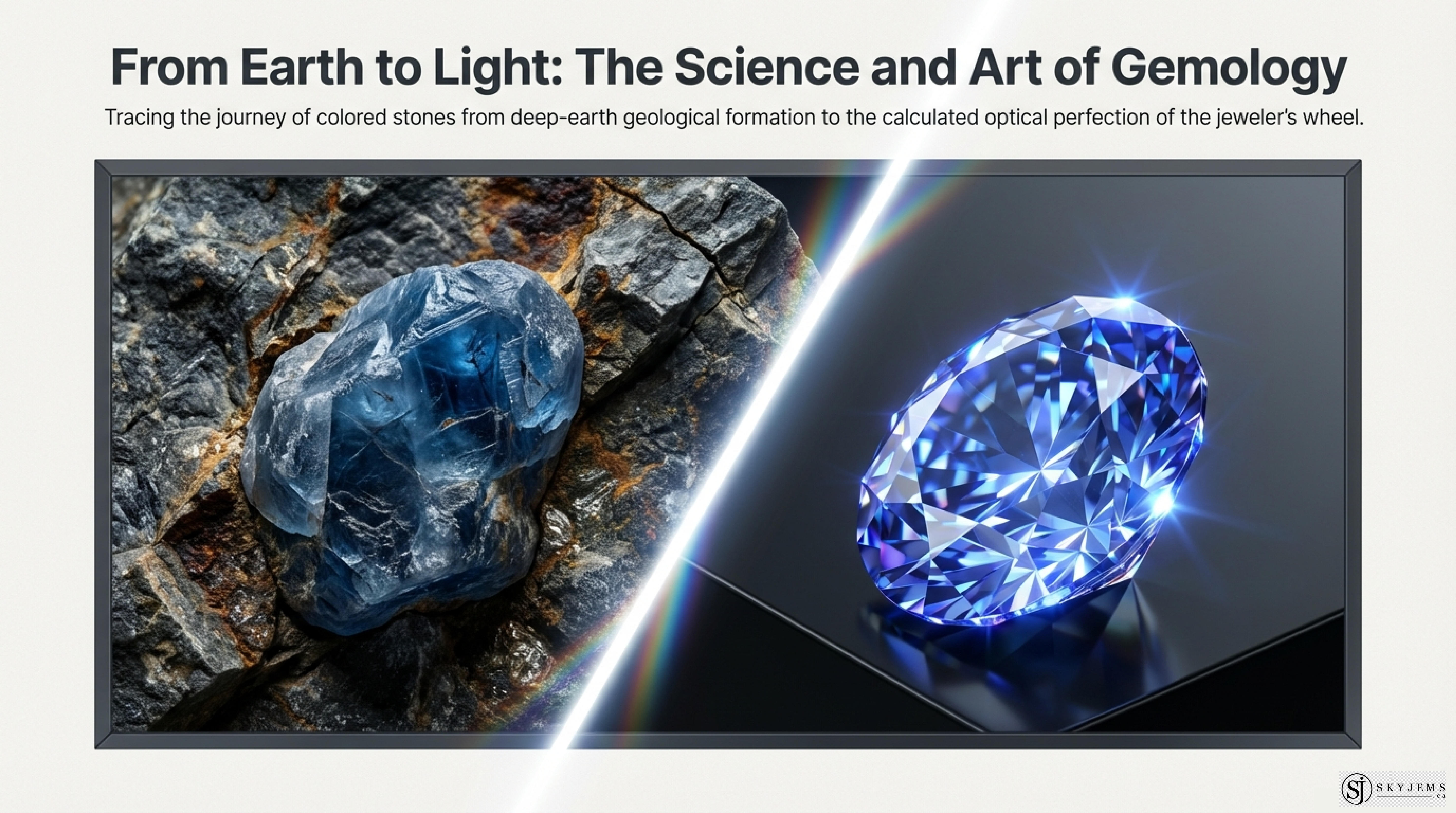
Introduction to Gems: The Science and Art of Gemology
When you gaze into the velvet depths of a Burmese ruby, the electric green of a Colombian emerald, or the shifting hues of a fine alexandrite, what do you see? Most of us see a beautiful piece of jewelry. But to a gemologist, a coloured gemstone is a thrilling story written in the language of chemistry, physics, and history. The field of gemological research exists at a fascinating intersection between the cold, dispassionate scientific method and the impassioned and provocative world of aesthetics and art.
A Collision of Art and Science
Gemology is far more than just identifying rocks. Jewelry making and gemology represent a highly demanding craft that combines creative design with the science of metallurgy and mineralogy—making it an all-inclusive art and science project.
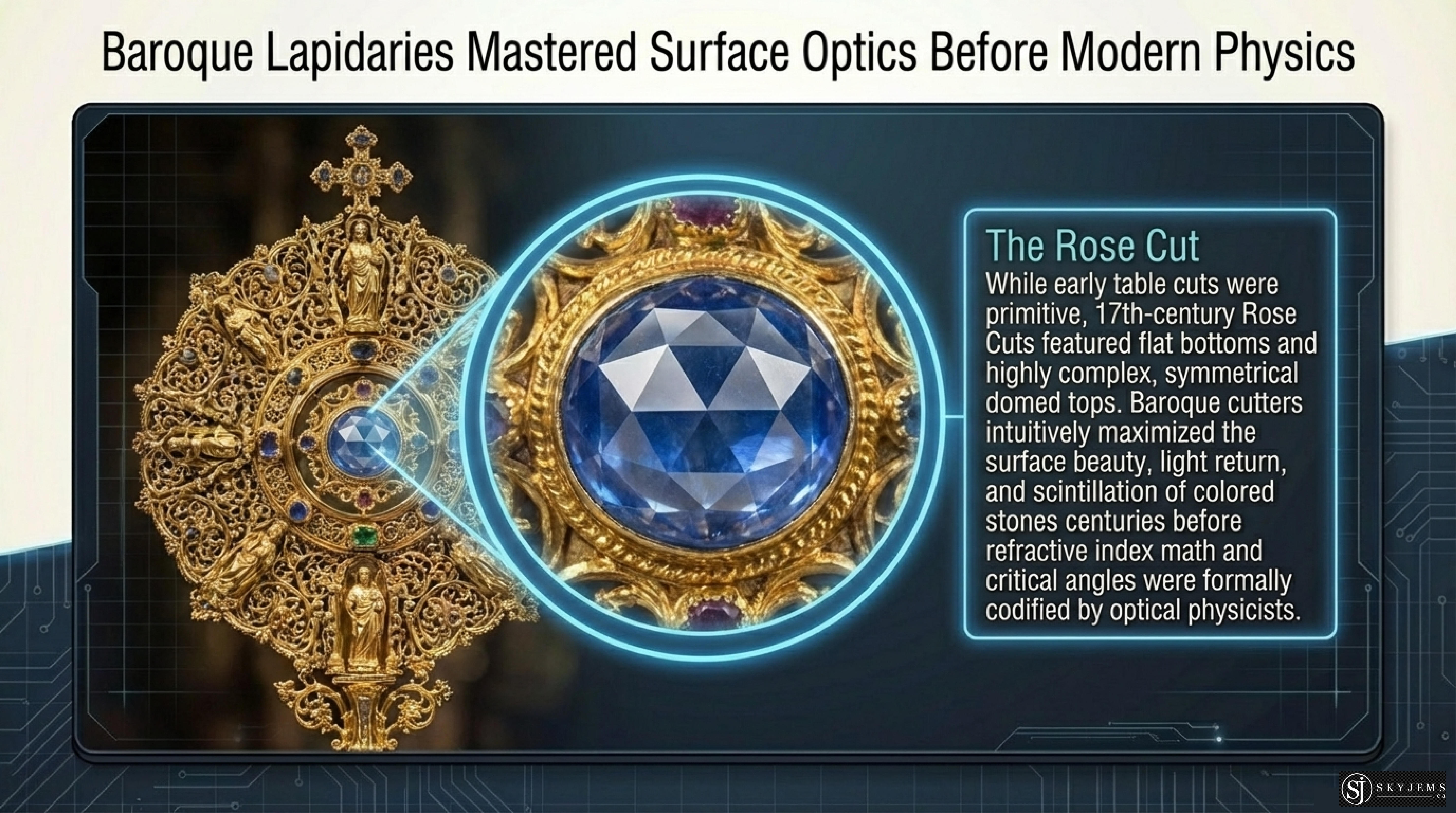
While gemology, geoscience, and mineralogy are the primary scientific ways to comprehend a gemstone's rarity relative to the composition of the planet, history and anthropology provide the crucial context for their value. Together, these disciplines offer a profound perspective on humanity's enduring relationship with one of our most ancient luxury goods.
Microscopic Time Machines
Coloured gems act as microscopic time capsules, preserving the extreme conditions of our planet's deepest history. By studying them, scientists can literally look back in time:
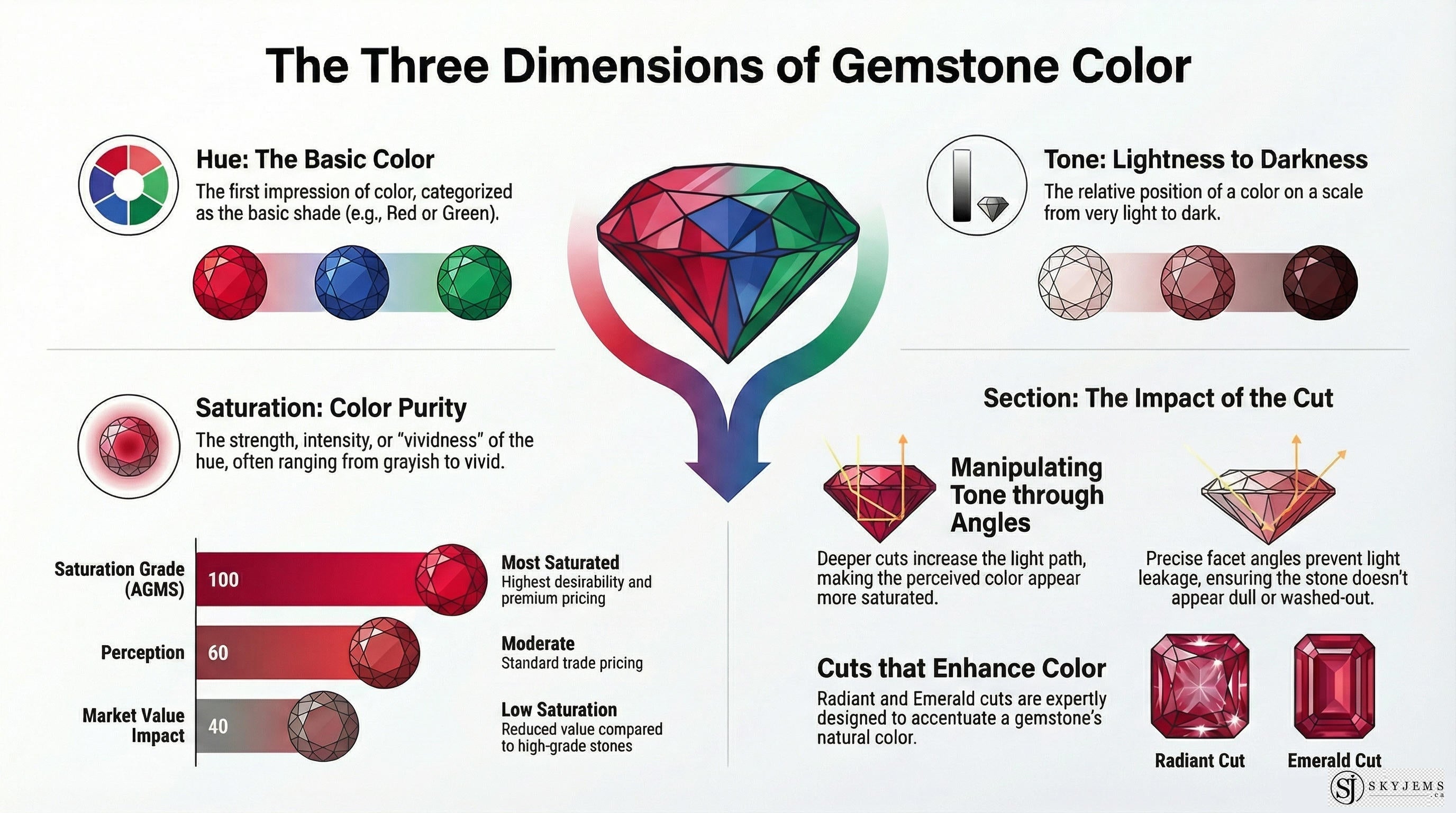
- Rubies and Sapphires: These stunning corundum gems are evidence of enormous heat and pressure deep underground. The trace chromium that gives a ruby its "pigeon's blood" red was locked in place millions of years ago during metamorphic events.
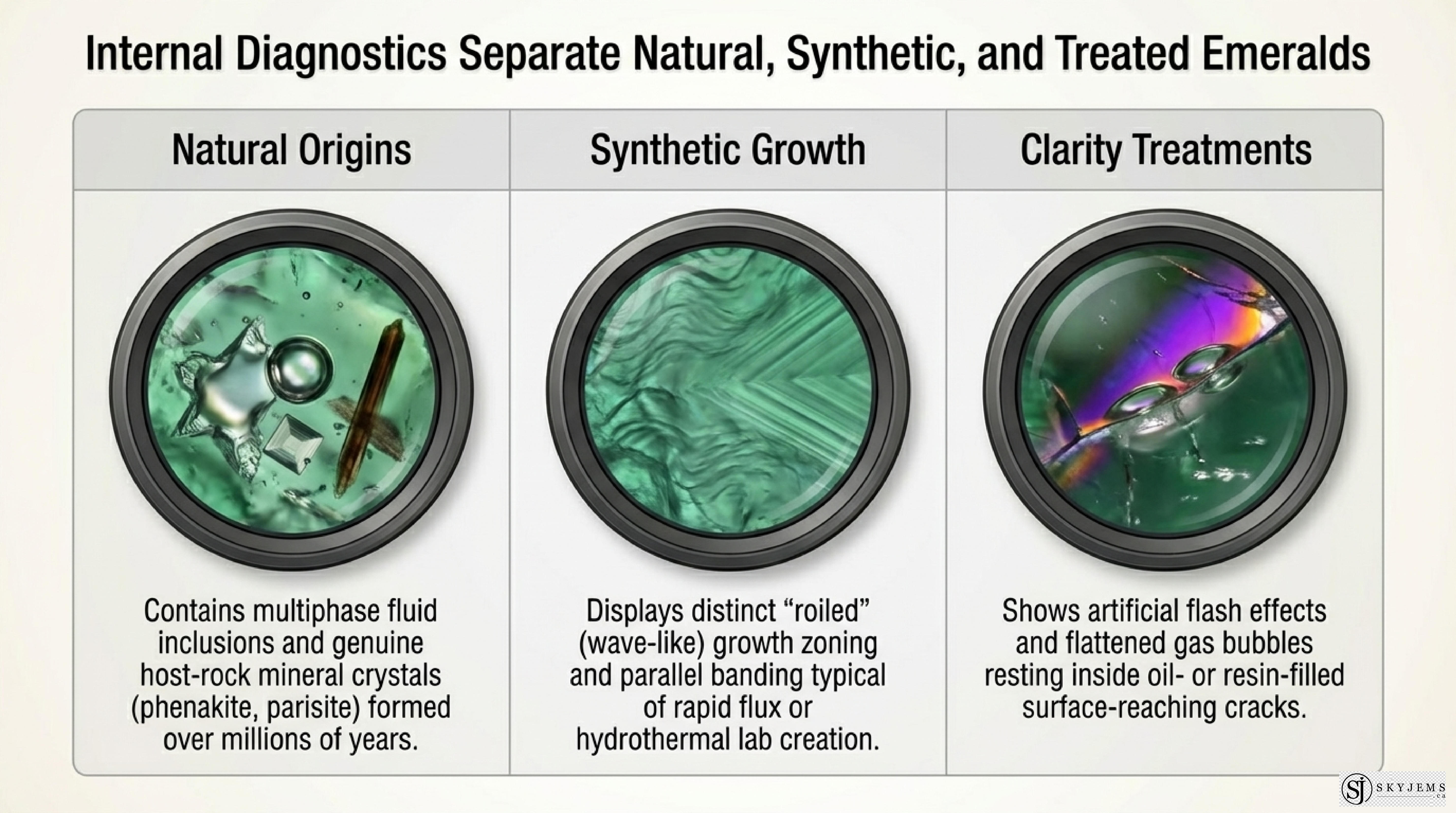
- Emeralds: Their signature three-phase inclusions—containing liquid, gas, and a tiny salt crystal—are direct samples of the ancient hydrothermal fluids that formed them deep within the earth.
- Spinels: Often found alongside rubies in alluvial deposits, spinels record the geological processes of ancient river systems that eroded them from their primary host rocks over millennia.
- Tsavorite Garnets: These vivid green gems formed under extreme pressures during continental collisions in East Africa, capturing a snapshot of tectonic forces hundreds of millions of years old.
- Tourmalines: Their extraordinary range of colours—from neon blue Paraiba to watermelon pink-green—records the shifting chemistry of the pegmatite fluids they crystallised from.
The Thrill of Field Gemology
Gemology isn't confined to a laboratory. Field gemologists travel to some of the most remote and exotic locations across the globe to trace gems right to their source. When these researchers journey to distant mines, they don't just return with study samples; they bring back stories and thousands of images that capture the cultural and human aspects of the trade, alongside the sheer breathtaking beauty of the places they visit.
Watch the Video Series
Three short films on the geology, the secret mines, and the historical mysteries that define fine coloured gems.
I · From Earth to Light
II · Mogok's Secret
III · The Eight-Hundred-Year Mistake
Interactive Gem Trivia
Click the questions below to test your new gemological knowledge.
Not at all! While it relies heavily on mineralogy and physics, it is fundamentally an intersection of the scientific method and the world of aesthetics and art. It also heavily relies on history and anthropology to understand the human value of gems.
Emeralds are like geological time capsules! Their signature three-phase inclusions—tiny cavities containing liquid, gas, and a salt crystal—are actual samples of the ancient fluids that formed them. Gemologists can even pinpoint a Colombian emerald's exact mine of origin by studying these microscopic features.
Rubies and spinels form under similar extreme conditions deep underground. Over millions of years, rivers erode them from their host rocks and deposit them together in alluvial gravels—which is why many historic "rubies" (including the famous Black Prince's Ruby in the British Crown Jewels) turned out to be magnificent spinels.


Leave a comment
This site is protected by hCaptcha and the hCaptcha Privacy Policy and Terms of Service apply.